

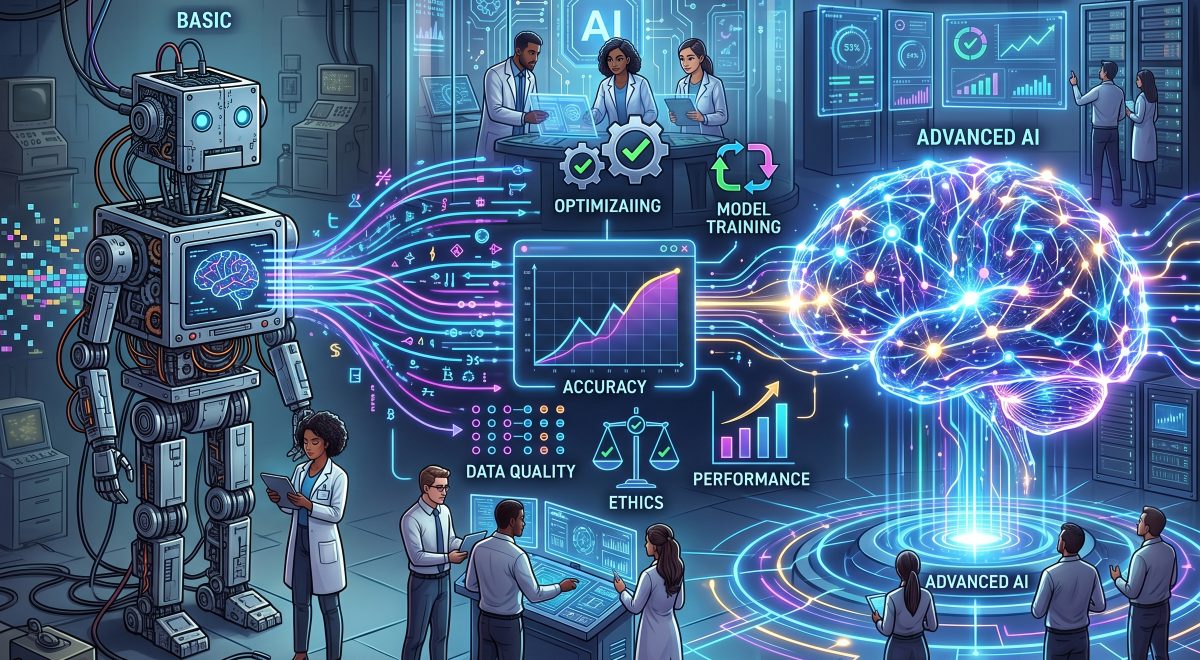
Powerful 27 ways to improve AI systems, enhance performance, and build smarter, more human-centered technology.
It’s easy to be impressed by artificial intelligence—until it fails in a way that feels strangely human. A chatbot misunderstands a simple request. A recommendation engine suggests something completely irrelevant. A supposedly “smart” system behaves in a way that makes you question how intelligent it really is. That gap between expectation and reality is where the real conversation begins.
Improving AI isn’t just about making machines faster or more complex. It’s about making them more useful, more reliable, and more aligned with how people actually think and behave. The truth is, better AI doesn’t come from a single breakthrough. It comes from dozens of deliberate improvements, layered thoughtfully over time.
This article explores 27 meaningful ways to improve AI—approaches grounded in practicality, not hype. Whether you’re a developer, a business owner, or simply curious about how AI can evolve, these insights will give you a clearer picture of what actually moves the needle.
Understanding What “Better AI” Really Means
Before diving into improvements, it’s worth clarifying something: better AI doesn’t always mean more advanced AI. Sometimes, it means simpler systems that perform consistently. Other times, it means systems that fail more gracefully.
At its core, improving AI means increasing accuracy, reliability, interpretability, and usefulness while reducing bias, errors, and unintended consequences. It’s a balancing act between technical capability and human experience.
Data: The Foundation That Defines Everything
Better Data Quality Leads to Better Outcomes
AI systems are only as good as the data they learn from. If the data is messy, biased, or incomplete, the results will reflect those flaws. Improving AI often starts with cleaning datasets, removing inconsistencies, and ensuring representation across different groups and scenarios.
Expanding Dataset Diversity
A model trained on narrow data will behave narrowly. Expanding datasets to include broader perspectives helps AI perform more reliably in real-world situations. This is especially critical in areas like language, healthcare, and decision-making systems.
Continuous Data Updating
Static datasets quickly become outdated. Feeding AI systems with fresh, evolving data allows them to stay relevant and adapt to changing patterns over time.
Model Design and Architecture Improvements
Choosing the Right Model for the Job
Not every problem requires a massive, complex model. Sometimes a smaller, well-tuned model outperforms a larger one. Matching the model to the problem is a fundamental but often overlooked improvement.
Fine-Tuning Over Starting From Scratch
Instead of building new models entirely, refining existing ones with domain-specific data can dramatically improve performance while saving time and resources.
Reducing Overfitting
AI that memorizes rather than generalizes is unreliable. Techniques that prevent overfitting ensure the system performs well beyond its training data.

Human Feedback: The Missing Ingredient
Incorporating Real User Feedback
One of the most powerful ways to improve AI is by listening to users. Real-world feedback highlights gaps that testing environments often miss.
Human-in-the-Loop Systems
Keeping humans involved in decision-making processes ensures better oversight and reduces critical errors, especially in sensitive applications.
Iterative Improvement Cycles
AI should never be considered “finished.” Continuous refinement based on feedback leads to steady, meaningful improvements.
Making AI More Interpretable and Transparent
Explainable AI Builds Trust
Users are more likely to trust systems they understand. Providing clear explanations for AI decisions helps bridge the gap between complexity and usability.
Simplifying Outputs
Even highly advanced AI becomes useless if its outputs are confusing. Clarity in communication is just as important as accuracy.
Reducing Bias and Improving Fairness
Identifying Hidden Biases
Bias often exists silently within training data. Actively auditing AI systems helps uncover and address these issues.
Building Fairness into the Design
Fairness shouldn’t be an afterthought. It needs to be embedded into the system from the beginning, influencing data collection, training, and evaluation.
Performance and Efficiency Enhancements
Optimizing for Speed and Scalability
Faster AI isn’t just about convenience. It enables real-time applications and better user experiences.
Reducing Resource Consumption
Efficient AI models lower costs and environmental impact, making them more sustainable in the long run.
Improving Context Awareness
Understanding User Intent Better
AI often struggles with nuance. Improving context awareness helps systems interpret meaning rather than just words.
Memory and Continuity
Allowing AI to retain relevant context over time leads to more coherent and useful interactions.
Strengthening Security and Robustness
Defending Against Adversarial Attacks
AI systems can be manipulated with carefully crafted inputs. Strengthening defenses ensures reliability even under pressure.
Handling Edge Cases Gracefully
Unexpected inputs shouldn’t break the system. Robust AI anticipates and manages unusual scenarios effectively.
Enhancing Collaboration Between AI and Humans
Designing for Assistance, Not Replacement
The most effective AI systems augment human capabilities rather than attempt to replace them entirely.
Improving User Interfaces
Even powerful AI can fail if the interface is confusing. Clear, intuitive design enhances usability and adoption.
Ethical Considerations That Actually Matter
Responsible Deployment
Just because AI can be used doesn’t mean it should be. Evaluating impact before deployment is critical.
Accountability Mechanisms
There should always be a way to trace decisions and hold systems accountable when things go wrong.
Continuous Learning and Adaptation
Online Learning Capabilities
AI that learns continuously from new data can adapt more effectively to changing environments.
Monitoring and Maintenance
Even the best AI systems degrade over time without proper monitoring. Regular evaluation ensures consistent performance.
Real-World Testing Over Theoretical Perfection
Testing in Practical Environments
AI often performs differently outside controlled settings. Real-world testing reveals true strengths and weaknesses.
Learning from Failures
Failures aren’t setbacks—they’re insights. Each mistake highlights an opportunity for improvement.
Creativity and Innovation in AI Development

Encouraging Experimental Approaches
Some of the most impactful improvements come from unconventional ideas. Innovation requires room for experimentation.
Combining Multiple Techniques
Hybrid systems that blend different approaches often outperform single-method solutions.
The Role of Simplicity in Better AI
Avoiding Unnecessary Complexity
More complexity doesn’t always mean better performance. Simpler systems are often easier to maintain, understand, and improve.
Focusing on Core Functionality
AI should excel at its primary purpose before expanding into additional features.
Scaling Responsibly
Gradual Deployment
Rolling out AI systems in stages allows for controlled testing and adjustment.
Monitoring User Impact
Understanding how users interact with AI provides valuable insights for future improvements.
Cultural and Social Awareness in AI
Adapting to Different Contexts
AI used globally must account for cultural differences in language, behavior, and expectations.
Avoiding One-Size-Fits-All Solutions
Customization improves relevance and effectiveness across diverse user groups.
Documentation and Knowledge Sharing
Clear Documentation Improves Development
Well-documented systems are easier to improve, maintain, and scale.
Sharing Insights Across Teams
Collaboration accelerates innovation and prevents repeated mistakes.
Balancing Automation with Control
Giving Users Control When Needed
Users should have the ability to override or guide AI decisions when necessary.
Avoiding Over-Automation
Too much automation can reduce flexibility and lead to unintended consequences.
Measuring What Actually Matters
Defining Meaningful Metrics
Accuracy alone isn’t enough. Metrics should reflect real-world usefulness and impact.
Continuous Evaluation
Improvement requires ongoing measurement and adjustment.
Bridging the Gap Between Research and Application
Turning Theory into Practice
Many AI breakthroughs remain theoretical. Applying them effectively is where real value is created.
Focusing on Practical Outcomes
AI should solve real problems, not just demonstrate technical capability.

Conclusion: Building AI That Actually Works
Improving AI isn’t about chasing perfection—it’s about making steady, intentional progress. Each improvement, no matter how small, contributes to systems that are more reliable, more useful, and more aligned with human needs.
The most important takeaway is this: better AI doesn’t happen by accident. It requires thoughtful design, continuous learning, and a willingness to confront limitations head-on.
If you’re working with AI—or even just thinking about how it shapes your world—the opportunity to improve it is always there. The question isn’t whether AI can get better. It’s whether we’re willing to put in the work to make it so.