

The real profit differences between online and in-person businesses in 2026. Honest comparison, real numbers, and expert advice to help you choose wisely
Online business vs in person business profits
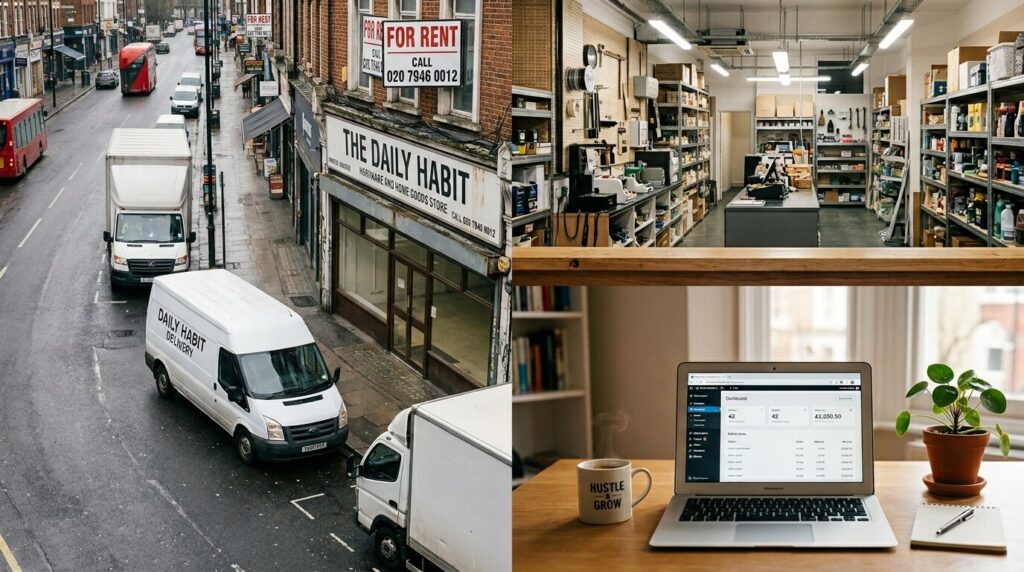
A cousin of mine spent three years building a clothing boutique in her city. Beautiful space. Loyal local customers. A brand she was genuinely proud of. And at the end of every month after paying rent, utilities, staff wages, insurance, and inventory costs, she was clearing somewhere between $800 and $1,400 in actual take-home profit.
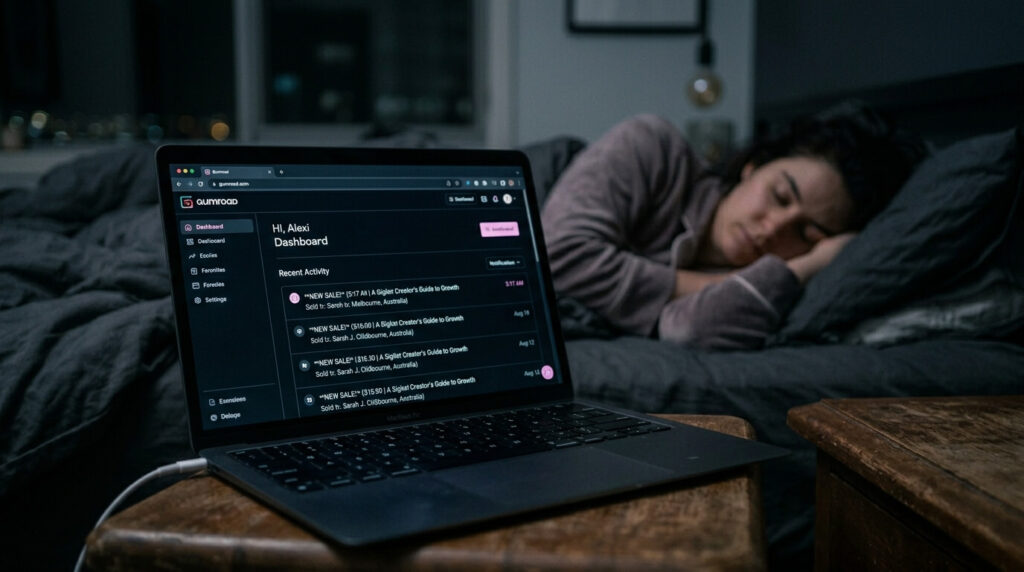
A friend of mine spent six months building a digital product shop and a small affiliate blog from her apartment. No staff. No lease. No inventory. No commute. By month eight she was clearing $2,300 per month and the income was growing without her costs growing alongside it.
Same general concept — running a business, selling things to people, building a customer base. Completely different financial realities.
The question of online business vs in person business profits is one of the most genuinely important decisions an entrepreneur makes at the beginning of their journey, and it deserves a more honest and specific answer than most comparison articles provide. This article delivers exactly that — a practical, experience-grounded breakdown of how profitability actually differs between online and in-person business models, what drives those differences, and how to choose the right model for your specific situation and goals in 2026.
The Core Profit Difference — Why the Numbers Look So Different
Before comparing specific business types, it is worth understanding the structural reason why online and in-person businesses produce such different profit outcomes for comparable revenue levels.
The answer is overhead. Specifically, the dramatic difference in fixed costs between a business that requires a physical location and a business that operates entirely or primarily online.
A physical retail store in a mid-size city typically carries fixed monthly costs between $3,000 and $12,000 before a single product is sold. Rent or lease payments. Utilities. Insurance. Point of sale systems. Basic security. Staff wages even on slow days. Signage and physical displays. These costs exist regardless of whether that month’s sales are strong or weak.
An online business selling the same category of products through a website and social media channels carries fixed monthly costs between $50 and $400 in most cases. Website hosting and domain. Email marketing software. Design tool subscriptions. Payment processing fees. No lease. No utilities tied to a commercial space. No insurance for a physical location. No staff unless the business owner chooses to hire.
The practical effect of this structural difference is that online businesses reach profitability at significantly lower revenue levels than physical businesses and maintain higher profit margins at equivalent revenue levels. A physical store doing $15,000 in monthly revenue might clear $1,500 to $3,000 in profit after overhead. An online business doing $15,000 in monthly revenue might clear $8,000 to $12,000 in profit because the cost base is so much smaller.
That difference is not a technicality. It is the defining financial characteristic of online versus in-person business models and it compounds dramatically over time as revenue scales.

Online Business Profit Margins — What the Numbers Actually Look Like
Profit margins vary significantly across online business types. Understanding the realistic range for each model is essential for making an informed decision about which to pursue.
Digital product businesses — selling ebooks, templates, courses, printables, and similar downloadable products — carry the highest profit margins of any business category. Once the product is created, the cost per additional unit sold approaches zero. A digital product that sells for $47 generates approximately $42 to $44 in profit after platform fees. Profit margins of 85 to 95 percent are genuinely achievable and common in established digital product businesses.
Software as a Service businesses and subscription-based online products also carry extremely high profit margins once development costs are recovered — typically 70 to 90 percent at scale — but require significantly higher initial investment and technical expertise to build.
E-commerce businesses selling physical products online occupy a middle position. An online store selling physical goods still carries product costs, shipping expenses, and return management overhead. Profit margins for online physical product retail typically range from 15 to 40 percent depending on product category, supplier relationships, and whether the business manufactures its own products or resells existing ones.
Affiliate marketing and content-based online businesses carry profit margins of 60 to 90 percent for established operations because the primary cost is the creator’s time rather than product inventory or distribution infrastructure.
Service-based online businesses — freelance work, consulting, coaching, and agency services — typically earn 70 to 85 percent profit margins because the primary input is skill and time with minimal material costs, though this model does not scale passively the way product and content businesses do.
In Person Business Profit Margins — The Honest Assessment
Physical business profitability varies enormously by industry, location, and business model. The important thing is understanding the structural constraints that apply regardless of those variables.
Retail stores selling physical products carry average profit margins of 2 to 12 percent in most consumer categories after all overhead is accounted for. Grocery retail operates on margins of 1 to 3 percent. Clothing retail operates on 4 to 13 percent. Specialty and boutique retail can reach 15 to 25 percent in premium niches but requires strong brand differentiation and consistent premium pricing to sustain.
Restaurant and food service businesses are among the most financially demanding physical businesses to operate. The combination of food cost, labor, rent, and equipment maintenance leaves most successful restaurants operating on net profit margins of 3 to 9 percent. Failure rates in the restaurant industry remain consistently high not because the businesses lack customers but because the overhead structure makes the path to profitability extremely narrow.
Service-based physical businesses — salons, fitness studios, repair shops, medical practices — operate on higher margins than retail because labor and expertise replace inventory as the primary input. A personal training studio or boutique fitness business with strong utilization can reach 15 to 30 percent net profit margins, which is competitive with many online business models at equivalent revenue levels.
Professional service businesses — accounting firms, legal practices, architecture studios — operating from physical offices are among the most profitable traditional in-person business models, with net margins of 20 to 40 percent for well-run practices. However, these businesses require significant professional credentials and years of experience to establish, placing them outside the realistic starting point for most new entrepreneurs.

Scalability — The Factor That Matters More Than Starting Profit Margins
Profit margins at any single revenue level matter less than how profit evolves as the business grows. This is where online and in-person businesses diverge most dramatically and where the long-term financial case for online models becomes most compelling.
Physical businesses scale by adding physical capacity — a second location, expanded floor space, more staff, more equipment. Every unit of scale adds proportional overhead. Doubling a physical business’s revenue typically requires roughly doubling its cost structure. The profit margin improvement from scale is real but gradual and capital-intensive.
Online businesses — particularly those built around digital products, content, software, or marketplaces — scale without proportional cost increases. A digital product creator who doubles their monthly sales volume does not need to double their expenses to fulfill those sales. A content website that doubles its traffic does not need to hire proportionally more staff to generate that additional traffic. The cost structure remains largely fixed while revenue grows, which means profit margin improves dramatically with scale rather than remaining stable.
This structural advantage is the reason online businesses with modest starting revenues can eventually outperform physical businesses with significantly higher gross revenues. The physical business that does $500,000 in annual gross revenue and clears 8 percent net profit earns $40,000 in annual profit. The online business that does $200,000 in annual revenue and clears 60 percent net profit earns $120,000 in annual profit. Higher gross revenue, lower net profit.
Scale compounds this advantage further. The online business that grows to $500,000 in annual revenue while maintaining 55 percent margins earns $275,000 in annual profit against the physical business’s $40,000 — from an equivalent gross revenue starting point.
Startup Costs — What It Actually Takes to Begin Each Path
Startup costs represent one of the most significant practical differences between online and physical business models, particularly for entrepreneurs without significant capital available at the beginning.
Starting a physical retail business in a commercial location realistically requires between $20,000 and $150,000 in initial capital covering lease deposits, initial inventory, fit-out costs, signage, equipment, operating capital to sustain the business through the initial period before cash flow stabilizes, and the various licensing and insurance requirements that vary by location and industry.
Starting a physical service business — a salon, a fitness studio, a repair shop — typically requires between $15,000 and $80,000 depending on equipment requirements, location, and staffing needs.
Starting an online business requires between $0 and $5,000 for most models available to beginner entrepreneurs. A digital product business can be started for under $50. A blog-based affiliate business requires domain and hosting at roughly $100 to $200 per year. A freelance service business can be started with the skills the entrepreneur already possesses and a free profile on an existing platform. An e-commerce business selling through established marketplaces can be started with inventory investment only — no website development costs required.
The capital barrier difference is not merely a financial consideration. It changes the risk profile of the decision entirely. An entrepreneur who invests $80,000 in a physical business location is making a commitment that takes years to recover regardless of whether the business model proves viable. An entrepreneur who invests $200 in an online business can validate the model, adjust the approach, or pivot entirely with no lasting financial consequence.
Geographic Reach and Customer Base — Another Dimension of Profit Potential
A physical business serves customers within a geographic radius determined by location, transportation infrastructure, and the nature of the business. A neighborhood restaurant serves people who live, work, or happen to be near that neighborhood. A retail boutique draws from the population within a practical driving distance. The ceiling on the customer base is defined by geography and cannot be easily expanded without opening additional locations.
An online business serves anyone with an internet connection who has an interest in what the business offers, regardless of where either party is physically located. A digital product creator in one country can sell to customers in fifty countries without any additional infrastructure, legal complexity in most cases, or logistical overhead.
This geographic reach difference has a direct and significant impact on profit potential. The total addressable market for an online business in most niches is multiple orders of magnitude larger than the total addressable market for a physical business in the same niche. A business operating against a larger total addressable market has structurally higher profit ceiling regardless of the efficiency of its operations.
When In Person Business Still Makes More Sense
This article is not an argument that online businesses are always better. There are specific circumstances and business categories where physical presence creates genuine competitive advantages that online models cannot replicate.
Businesses built on tactile or experiential products benefit from physical presence in ways that are difficult to replace online. High-end furniture, bespoke clothing, fine dining, spa services, and specialty food products all benefit from the customer’s ability to physically experience the product or service before and during purchase.
Businesses serving local community needs with relationship-based trust — local legal practices, medical offices, neighborhood pharmacies, specialized repair services — benefit from the physical presence and community integration that online businesses cannot fully substitute.
Businesses where the owner’s physical presence is the product — performance artists, specialized instructors, hands-on craftspeople — require the in-person context to deliver the core value proposition regardless of how efficiently an online infrastructure might handle surrounding business functions.
The honest answer to online versus in-person business profits is not that one model is universally superior. It is that for most products and services that can be delivered digitally or shipped physically, online business models offer dramatically better profit margin potential, lower startup risk, greater scalability, and broader market access than equivalent physical business models in 2026.

Building a Hybrid Model — How the Most Profitable Small Businesses Operate in 2026
The most financially sophisticated small businesses in 2026 are not choosing exclusively between online and in-person models. They are building hybrid operations that use physical presence to establish trust and community while using online infrastructure to scale revenue beyond geographic constraints.
A local fitness instructor who teaches in-person classes but also sells online coaching programs, digital training plans, and recorded workout libraries earns from both the local market and the global online market simultaneously. The physical business establishes credibility and community. The online business scales that credibility into income that does not require additional hours of physical presence to generate.
A specialty food producer who sells at local farmers markets but also runs an online store shipping nationally earns from local relationship-based sales and national reach-based sales with a single production operation supporting both channels.
A consultant who works with local clients in person but also produces online courses, publishes paid newsletters, and accepts remote clients internationally has built a business where the income ceiling of the local market does not define the income ceiling of the business.
This hybrid approach represents the most intelligent business architecture available to small business owners who want the trust advantages of physical presence and the scalability advantages of online operations simultaneously.
Which is more profitable — an online business or a physical store?
In most comparable product and service categories, online businesses generate higher net profit margins than physical stores at equivalent revenue levels because of dramatically lower fixed overhead costs. A physical store doing $100,000 in annual revenue might clear 8 to 15 percent in net profit. An online business doing the same revenue might clear 40 to 70 percent depending on the business model. The profit advantage of online business models increases further as revenue scales because online businesses do not need to proportionally increase costs to handle higher volume.
How much does it cost to start an online business compared to a physical one?
Online businesses can be started for as little as $0 to $500 for most models accessible to beginner entrepreneurs. Physical businesses in commercial locations typically require $20,000 to $150,000 in initial capital depending on the industry, location, and scale. This startup cost difference fundamentally changes the risk profile of each decision — online business failures cost time and modest financial investment while physical business failures can result in significant long-term debt and financial setback.
Can an online business replace a full-time income?
Yes, and many do. The timeline to full-time income replacement varies significantly by business model, effort level, and niche selection. Digital product businesses, service-based online businesses, and content businesses with strong affiliate or advertising income all have documented paths to full-time income replacement within one to three years of consistent building. The key variable is consistency during the early months when results are modest but the foundation is being established.
What type of online business has the highest profit margins?
Digital product businesses — selling ebooks, courses, templates, software, and downloadable assets — consistently generate the highest profit margins of any online business category, typically 80 to 95 percent of revenue after platform fees and minimal operating costs. This is because the cost per additional unit sold approaches zero after the initial product creation, meaning revenue scales without proportional cost increases in a way that no physical product business can match.
Is it harder to build trust with customers online than in person?
Building trust online requires different strategies than building trust in person but is not inherently harder in 2026. Consistent content creation, genuine expertise demonstrated through useful information, transparent business practices, customer reviews and testimonials, and active community engagement all build online trust effectively. Many online businesses report that customers who find them through content or recommendations arrive with higher initial trust than walk-in customers at physical locations because they have already engaged with the business’s content before making a purchase decision.
Should a beginner start an online or physical business in 2026?
For most beginners with limited startup capital and no existing physical business infrastructure, online business models offer a significantly better risk-adjusted starting point in 2026. Lower startup costs, higher profit margins, geographic flexibility, and the ability to test and adjust the business model without long-term financial commitment make online businesses the more accessible and more forgiving entry point. The specific online business model that fits best depends on the entrepreneur’s existing skills, available time, and income timeline requirements.
Can you run a successful business that combines online and in-person elements?
Absolutely, and this hybrid model is increasingly common among the most financially successful small business owners. Using physical presence to establish local trust and community while using online infrastructure to serve a broader market and generate scalable revenue from digital products, courses, or remote services allows business owners to access the advantages of both models simultaneously. The hybrid approach is particularly effective for service businesses, specialty product businesses, and knowledge-based businesses where the owner’s expertise is the core product.

Conclusion
The honest answer to the online versus in-person business profits question is this. Online business models offer structurally higher profit margins, lower startup costs, broader market access, and greater scalability than equivalent physical business models for most product and service categories in 2026. The overhead difference alone — the gap between running a business from a commercial lease and running a business from a laptop — changes the financial math of entrepreneurship at every revenue level.
That does not mean physical businesses are obsolete or that every entrepreneur should abandon the idea of a brick-and-mortar operation. Businesses built on physical experience, local trust, or hands-on service delivery retain genuine advantages that online models cannot fully replicate. And the hybrid model — physical presence combined with online scalability — represents the most sophisticated and often most profitable approach available to small business owners with the flexibility to pursue it.
What it does mean is that a beginner entrepreneur in 2026 evaluating their first business decision should look at the profit margin realities clearly rather than defaulting to the business models that were most visible and most normalized in previous decades. The tools, platforms, and infrastructure for building profitable online businesses have never been more accessible, more capable, or more forgiving of the inevitable learning curve that comes with starting something new.
The choice between online and in-person is ultimately a choice about what kind of business life you want to build — and understanding the honest financial realities of each model is the starting point for making that choice well.
If this article helped clarify your thinking, share it with someone who is currently weighing this decision. The more clearly entrepreneurs understand the profit structures of different business models before committing, the better decisions they make and the better outcomes they build. And if you have personal experience running both an online and a physical business, your perspective in the comments would add genuine value to this conversation for everyone reading