
Discover the hidden trends shaping AI in 2026–2027. Learn what breakthroughs, risks, and opportunities define the future of artificial intelligence and how it will impact your life and work
Introduction
Artificial intelligence is no longer a futuristic concept. It is already embedded in how we work, communicate, and make decisions. Yet, most people only see the surface. The real transformation is happening quietly behind the scenes.
The secret of AI 2026–2027 is not just about smarter tools or faster machines. It is about a fundamental shift in how intelligence itself is created, distributed, and controlled. The next phase of AI will not simply improve what exists today. It will redefine industries, reshape economies, and challenge what it means to be human in a digital world.
This article explores what is actually coming, what most people misunderstand, and how you can prepare for the next wave of AI.
The Secret of AI 2026–2027 Explained
The phrase secret of AI 2026–2027 refers to the underlying changes that go beyond mainstream attention. While many focus on chatbots and automation, the real developments involve autonomy, personalization, and self-improving systems.
This new phase of AI is defined by systems that:
- Operate independently
- Learn continuously
- Adapt to individual users
- Execute complex goals
These capabilities mark a clear transition from simple tools to intelligent systems.
Why the Secret of AI 2026–2027 Matters
The Secret of AI 2026–2027 this transformation is not just technological. It has real consequences for individuals and businesses.
AI is becoming:
- A decision maker, not just a helper
- A strategic tool, not just an operational one
- A core system, not just an add-on
Those who understand these changes early will gain a significant advantage.
If you are interested in how AI tools are already improving workflows, you can explore our guide on AI productivity systems /ai-productivity-systems
Understanding the Main Keyword: The Secret of AI 2026–2027
The phrase “secret of AI 2026–2027” refers to the deeper, less obvious developments shaping artificial intelligence beyond mainstream headlines. While the public focuses on chatbots and automation, the real changes involve autonomy, personalization, and control systems that operate at a much higher level.
These secrets are not hidden because they are classified. They are overlooked because they require connecting multiple trends across technology, business, and society.
The Shift From Tools to Autonomous Systems
AI Is Moving Beyond Assistance
Today’s AI mostly acts as an assistant. It helps write emails, generate images, or analyze data. By 2026 and 2027, this model will feel outdated.
AI systems are evolving into autonomous agents that can:
- Make decisions without constant human input
- Execute complex tasks across multiple platforms
- Learn continuously from real world feedback
Instead of asking AI to do one task at a time, users will assign goals. The AI will figure out how to achieve them.

What This Means in Practice
Imagine telling an AI system:
“Launch a small online business selling digital products.”
Instead of giving suggestions, the AI will:
- Research market demand
- Create products
- Build a website
- Run marketing campaigns
- Optimize based on performance
This level of autonomy is one of the biggest secrets of AI’s next phase.
The Rise of Personal AI Ecosystems
Your AI Will Become Your Digital Extension
Another major shift is the emergence of deeply personalized AI systems. These will not be generic tools used by everyone. They will be tailored specifically to individuals.
Your AI will understand:
- Your habits
- Your preferences
- Your goals
- Your decision patterns
Over time, it will act almost like a digital version of yourself.
Why This Matters
This personalization creates both opportunity and risk.
On one hand, it increases productivity dramatically. On the other, it raises serious questions about privacy and dependency.
The secret here is not just smarter AI. It is AI that knows you better than you know yourself.
The Hidden Infrastructure Powering AI Growth
AI Is Not Just Software
Most people think of AI as apps or platforms. The reality is that the real battle is happening at the infrastructure level.
Key components include:
- Advanced chips and processors
- Massive data centers
- Energy consumption systems
- Cloud computing networks
By 2026–2027, control over this infrastructure will determine who leads in AI.
The Energy Factor
AI systems require enormous amounts of energy. This is often ignored in public discussions.
Companies and countries that solve energy efficiency will gain a significant advantage. This is one of the least talked about but most critical aspects of AI’s future.
AI and the Future of Work
Jobs Will Not Simply Disappear
A common fear is that AI will replace all jobs. The reality is more complex.
AI will:
- Eliminate repetitive tasks
- Transform existing roles
- Create entirely new categories of work
The secret is not job loss. It is job evolution at an unprecedented speed.
The Skills That Will Matter
By 2027, the most valuable skills will include:
- Strategic thinking
- Creativity
- Emotional intelligence
- AI collaboration
People who learn how to work with AI, rather than compete against it, will have a clear advantage.
The Intelligence Explosion
AI Is Improving Itself
One of the most important but underappreciated trends is that AI is beginning to improve its own capabilities.
This creates a feedback loop:
- AI builds better models
- Better models create stronger AI
- The cycle accelerates
This phenomenon is sometimes referred to as an intelligence explosion.
Why This Changes Everything
Unlike traditional technology, AI does not improve linearly. It improves exponentially.
This means that the difference between 2025 and 2027 could be far greater than the difference between 2015 and 2025.
That is the real secret many people underestimate.
The Ethical and Control Challenge
Who Controls AI?
As AI becomes more powerful, control becomes a critical issue.
Key questions include:
- Who decides how AI is used?
- Who owns the data?
- Who is responsible when AI makes mistakes?
These are not theoretical concerns. They will define the next decade.
Regulation Is Lagging Behind
Governments are struggling to keep up with the pace of AI development.
By 2026–2027, we will likely see:
- Stronger regulations
- Global competition over AI standards
- Increased focus on safety and transparency
However, regulation will always lag behind innovation. This gap is where both opportunity and risk exist.
AI in Everyday Life
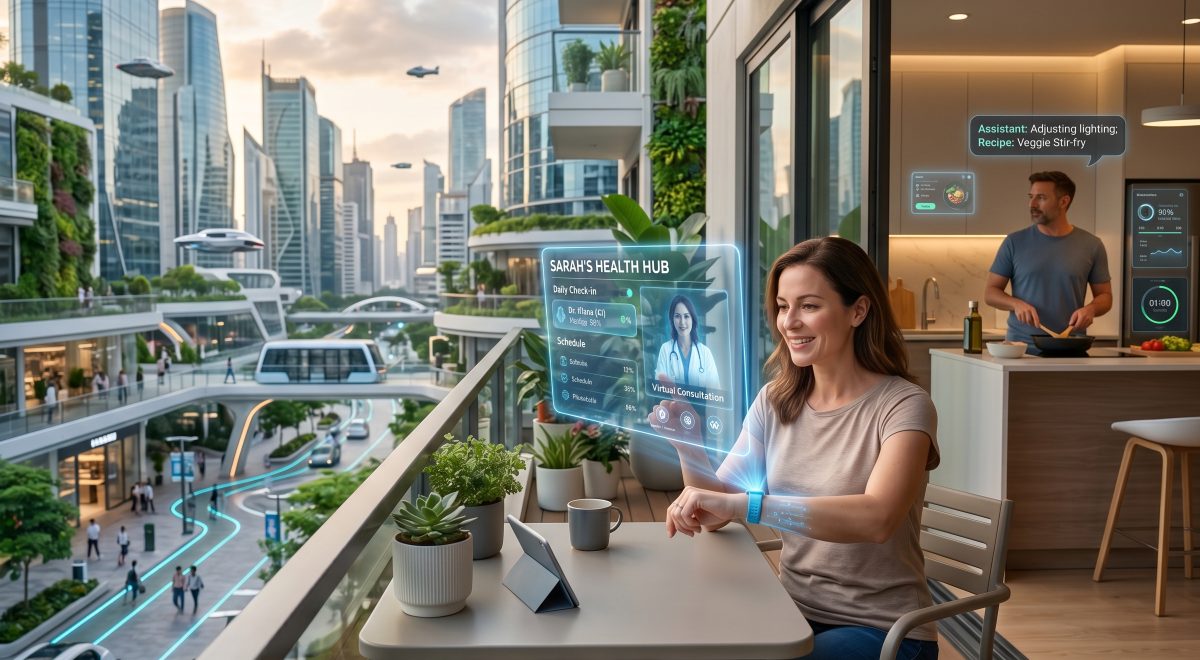
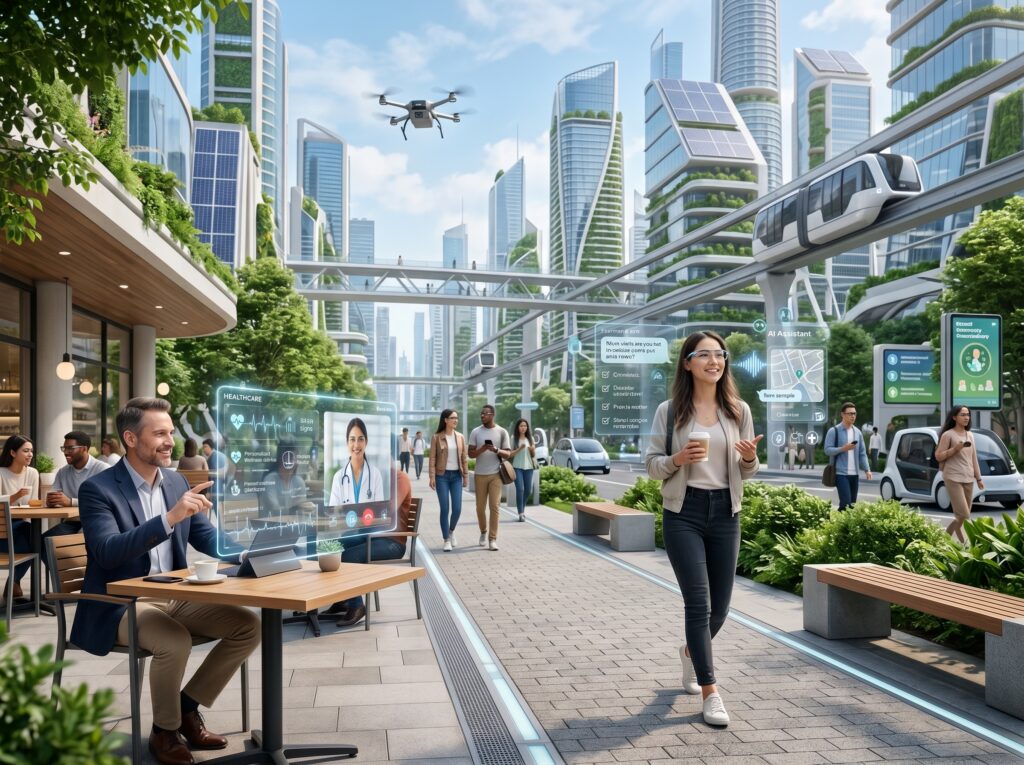
Invisible Integration
One of the biggest changes is that AI will become less visible.
Instead of obvious tools, AI will be embedded in:
- Communication systems
- Healthcare services
- Education platforms
- Financial systems
You may not even realize when you are interacting with AI.
Real World Examples
In healthcare, AI could:
- Predict diseases before symptoms appear
- Customize treatment plans
In education, it could:
- Adapt learning to each student
- Provide real time feedback
The secret is not that AI will be everywhere. It is that it will become invisible but essential.
The Business Transformation
Companies Will Be Rebuilt Around AI
Businesses are not just adopting AI. They are being redesigned around it.
By 2027:
- AI will drive decision making
- Operations will be highly automated
- Customer experiences will be deeply personalized
Companies that fail to adapt will struggle to survive.
The Competitive Edge
The real advantage will not come from using AI. It will come from how effectively it is integrated.
Two companies may use the same AI tools, but the one with better strategy and execution will dominate.
The Risk Nobody Talks About
Overdependence on AI
As AI becomes more capable, there is a growing risk of overreliance.
People may:
- Stop developing critical thinking skills
- Trust AI decisions without question
- Lose control over important processes
This is a subtle but serious risk.
The Balance We Need
The challenge is not to avoid AI, but to use it wisely.
Human judgment must remain central, even as AI capabilities expand.
How to Prepare for AI 2026–2027
1. Learn How AI Works
You do not need to become an expert, but you should understand:
- Basic concepts
- Capabilities and limitations
- Practical applications
2. Develop Human-Centric Skills
Focus on skills that AI cannot easily replicate, such as:
- Creativity
- Leadership
- Communication
3. Stay Adaptable
The pace of change will continue to accelerate. Flexibility will be one of the most valuable traits.
4. Use AI Strategically
Do not just use AI tools randomly. Integrate them into your workflow in a way that adds real value.
Conclusion
The secret of AI 2026–2027 is not a single breakthrough or product. It is a combination of trends that together create a powerful transformation.
AI is moving from a tool to an autonomous system. It is becoming deeply personal, widely integrated, and increasingly powerful. At the same time, it raises new challenges around control, ethics, and human dependency.
Those who understand these shifts early will be better positioned to adapt and succeed. Those who ignore them may find themselves struggling to keep up.
The future of AI is not something that will happen later. It is already unfolding. The real question is whether you are ready for it.
FAQ
1. What is the secret of AI 2026–2027?
The secret lies in the shift from simple AI tools to autonomous, self-improving systems that can operate with minimal human input while becoming deeply personalized.
2. Will AI replace all jobs by 2027?
No, but it will significantly transform the job market. Many roles will evolve, and new opportunities will emerge, especially for those who can work alongside AI.
3. How can I prepare for the future of AI?
Focus on learning how AI works, develop human-centered skills, stay adaptable, and use AI strategically in your daily work.
4. Is AI dangerous in the future?
AI has risks, especially related to control, ethics, and overdependence. However, with proper management and awareness, these risks can be minimized.
5. What industries will be most affected by AI?
Industries such as healthcare, education, finance, and technology will see the most significant changes, but nearly every sector will be impacted in some way