

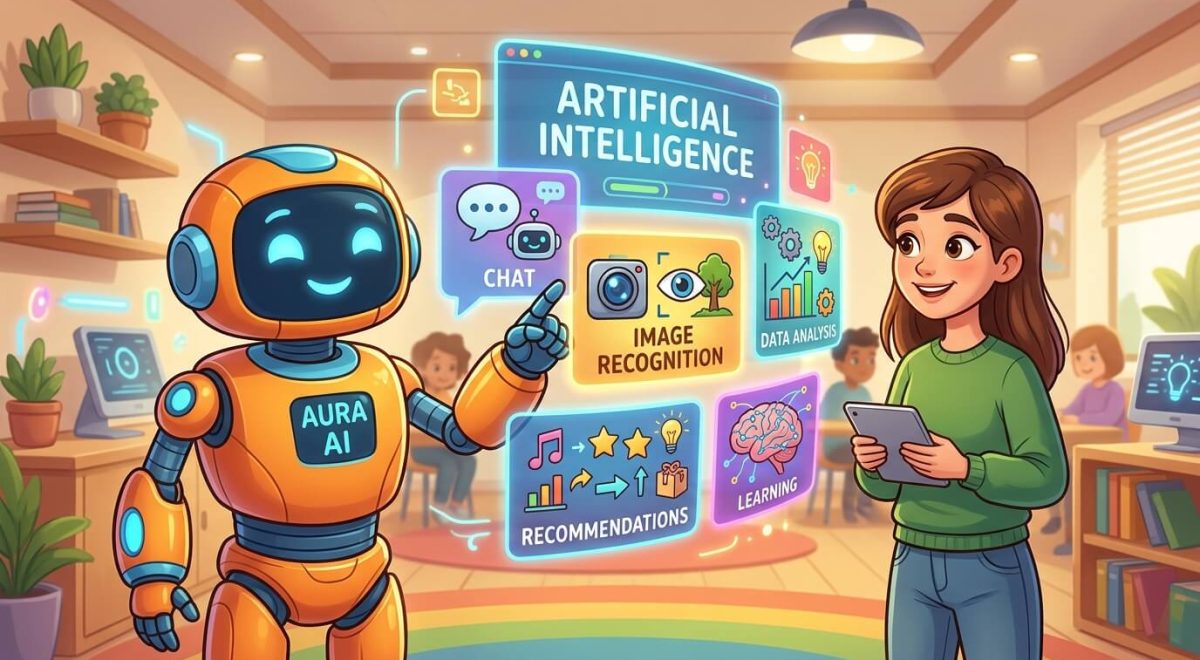
What is Artificial Intelligence Ai ? Learn how AI works, real-world examples, benefits, risks, and future trends in this beginner-friendly guide (2026).
Introduction
Artificial Intelligence (AI) is one of the fastest-growing technologies in 2026. From smartphones to business automation, Artificial Intelligence is transforming industries and everyday life.
If you’re new to AI, this guide explains what Artificial Intelligence Ai is, how it works, and why it matters in simple, practical terms.
What Is Artificial Intelligence Ai?
Artificial Intelligence (AI) refers to machines or software that can perform tasks that normally require human intelligence.
These tasks include learning from data, understanding language, recognizing images, making decisions, and solving problems.
In simple terms, Artificial Intelligence enables computers to simulate human intelligence and automate complex processes.
/what-is-artificial-intelligence-ai-guide-2026
How Does Artificial Intelligence Work?
Artificial Intelligence works using data, algorithms, and machine learning models.
AI systems are trained on large datasets, which allow them to identify patterns and improve over time. Machine learning and deep learning techniques help Artificial Intelligence systems make accurate predictions and decisions.
Once trained, AI can automate tasks, analyze data, and optimize processes without constant human input.
Types of Artificial Intelligence
Artificial Intelligence can be categorized into three main types.
Narrow Artificial Intelligence (Weak AI) is designed for specific tasks such as chatbots, recommendation systems, and voice assistants.
General Artificial Intelligence (Strong AI) refers to systems that can perform any intellectual task like humans, although it has not yet been achieved.
Superintelligent Artificial Intelligence is a theoretical concept where machines surpass human intelligence and raise ethical concerns.
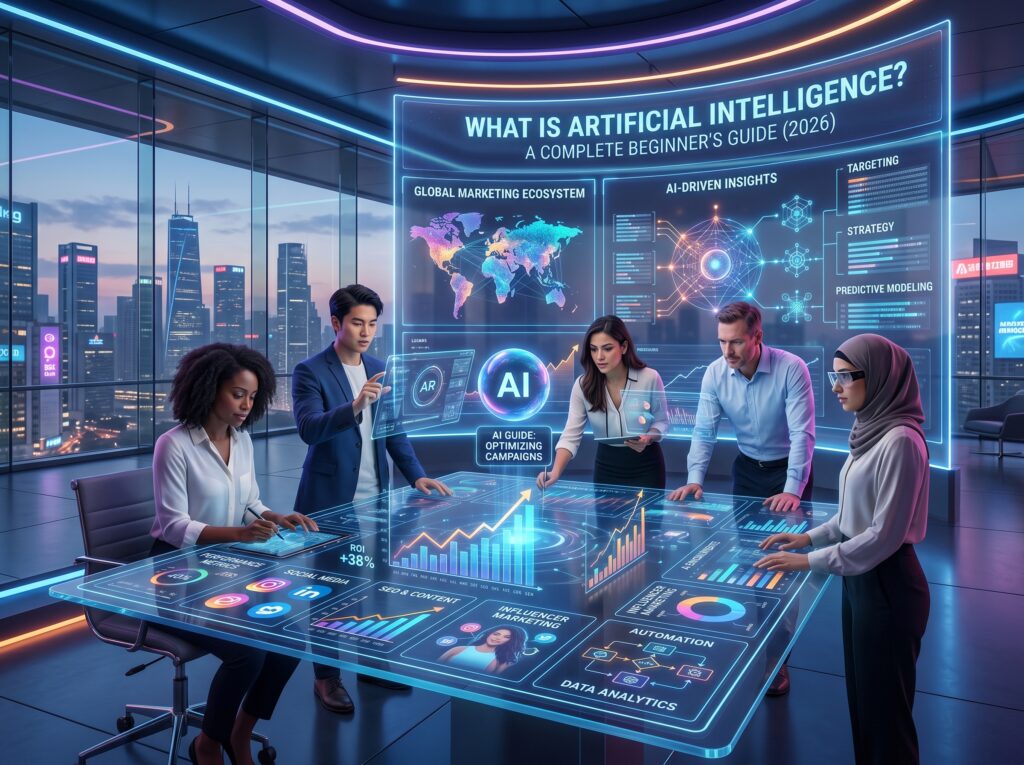
Key Technologies Behind Artificial Intelligence
Artificial Intelligence is built on several core technologies.
Machine Learning allows systems to learn from data automatically. Deep Learning uses neural networks for complex data processing. Natural Language Processing (NLP) enables AI to understand and generate human language. Computer Vision allows machines to analyze images and videos.
These technologies form the foundation of modern AI systems.
Real-World Applications of Artificial Intelligence
Artificial Intelligence is widely used across industries.
In smartphones, AI powers voice assistants, facial recognition, and predictive text. In digital platforms, Artificial Intelligence drives personalized recommendations and search results. In healthcare, AI supports diagnostics and medical analysis. In finance, it detects fraud and automates decision-making. In transportation, Artificial Intelligence enables self-driving systems and traffic optimization.
These real-world applications show how AI is already integrated into daily life.
Benefits of Artificial Intelligence
Artificial Intelligence improves efficiency by processing large amounts of data quickly. It increases accuracy by reducing human error. It enables automation of repetitive tasks and supports 24/7 operations.
Businesses use Artificial Intelligence to improve productivity, reduce costs, and enhance customer experience.
Risks and Challenges of Artificial Intelligence
Artificial Intelligence also comes with challenges. Automation can lead to job displacement in certain industries. AI systems may produce biased results if trained on poor data. Privacy concerns arise due to data collection. Some AI models lack transparency, making decisions difficult to explain.
Understanding these risks is essential for responsible AI adoption.
Artificial Intelligence Trends in 2026
Artificial Intelligence in 2026 is evolving rapidly. Generative AI is now capable of creating text, images, videos, and code. Businesses are using AI for marketing automation, customer personalization, and predictive analytics. AI tools are becoming more accessible, and regulations are emerging to ensure ethical use.
These trends highlight the growing importance of Artificial Intelligence in modern business and technology.

How to Learn Artificial Intelligence
To get started with Artificial Intelligence, begin with basic concepts like machine learning and data analysis. Use beginner-friendly AI tools to gain experience. Take online courses and build small projects to develop practical skills.
Learning Artificial Intelligence step by step makes it easier to understand and apply.
Common Misconceptions About Artificial Intelligence
Artificial Intelligence will not replace all jobs but will change how work is done. AI does not think like humans; it processes data and patterns. Artificial Intelligence is not always accurate and depends heavily on training data quality.
Clearing these misconceptions helps build a realistic understanding of AI.
Future of Artificial Intelligence
The future of Artificial Intelligence includes smarter automation, improved human-AI interaction, and advanced decision-making systems. AI will continue to impact industries such as healthcare, finance, and education.
Businesses and individuals who understand Artificial Intelligence will have a strong advantage in the coming years.
Conclusion
Artificial Intelligence is no longer a future concept—it is already shaping the present. Understanding what Artificial Intelligence is and how it works helps you stay competitive in a rapidly changing world.
The key is not just using AI tools, but understanding how Artificial Intelligence creates value.
FAQs
What is Artificial Intelligence in simple terms?
Artificial Intelligence is technology that allows machines to perform tasks that normally require human intelligence.
How does Artificial Intelligence work?
It uses data, algorithms, and machine learning to analyze information and make decisions.
What are the types of Artificial Intelligence?
Narrow AI, General AI, and Superintelligent AI.
Where is Artificial Intelligence used?
It is used in smartphones, healthcare, finance, transportation, and online platforms.
Is Artificial Intelligence safe?
Artificial Intelligence has benefits but also risks such as bias, privacy concerns, and misuse.