

15 practical lessons about AI you need to learn to succeed, with real-world examples, simple explanations, and actionable insights.
Introduction
Artificial intelligence is no longer something abstract or distant. It is already changing how people work, run businesses, and make decisions. The real difference today is not who has access to AI, but who understands how to use it properly.
AI You Many people either overestimate AI or underestimate it. Both are mistakes. If you want to stay relevant, you need to understand the practical lessons about AI you need to learn to succeed and apply them in real situations.
This guide keeps things simple, realistic, and focused on what actually works.
1. AI Is a Tool, Not a Replacement
AI can speed up work, but it cannot replace responsibility, judgment, or real understanding.
For example, some websites tried to publish fully AI-generated content without human editing. The result was lower quality and reduced traffic. The problem was not AI itself, but how it was used.
People who succeed treat AI as a support system, not a replacement.
2. AI You Don’t Need to Code, But You Must Understand
You don’t need technical skills to benefit from AI, but you do need basic understanding.
A small business owner can use AI to analyze customer feedback and improve services without writing code. What matters is knowing what to ask and how to use the output.
3. Data Is the Foundation of AI
AI depends on data. If the data is poor, the results will be poor.
A retail company once used outdated data to predict demand and ended up stocking the wrong products. The system worked, but the input was flawed.
Always question the quality of the data behind the output.
4. Prompting Is a Core Skill
How you ask matters as much as what you ask.
A vague request like “write something about AI” will give weak results. A clear request with details will produce much better output.
Prompting is a real skill, and improving it gives immediate results.
5. AI Makes Mistakes—Always Verify
AI can sound confident even when it is wrong.
There have been cases where students used AI-generated references that did not exist. This shows why verification is necessary.
Always double-check important information.
6. Speed Is a Competitive Advantage
AI allows people to complete tasks much faster.
Freelancers who use AI properly can deliver work quicker and take on more clients. However, speed only matters if quality stays high.
7. Creativity Still Matters
AI can generate ideas, but most of them are average.
Brands that rely only on AI tend to sound similar. The ones that add personality and creativity stand out.
Original thinking is still valuable.
8. AI Will Not Fix Poor Thinking
If your input is unclear, your output will be unclear.
AI does not correct weak logic. It simply reflects it.
Clear thinking leads to better results.

9. Learn to Combine Multiple Tools
Using one tool is limiting. Real efficiency comes from combining tools.
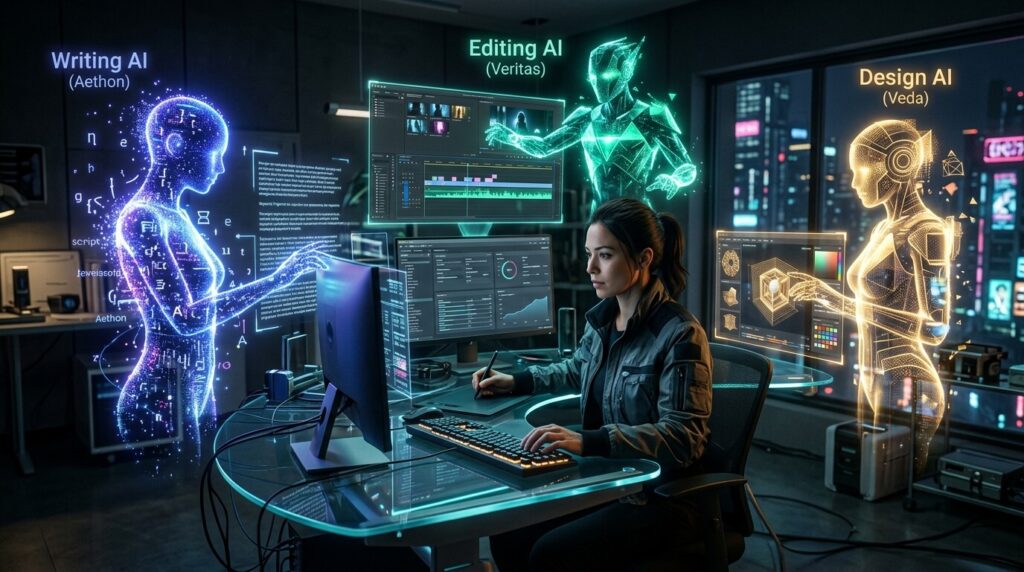
For example, someone might use one AI tool for writing, another for visuals, and another for analysis. This creates a stronger workflow.
10. Ethics and Responsibility Matter
AI can be misused easily.
Some businesses have used AI to generate fake reviews or misleading content. This may work short-term, but it damages trust.
Long-term success depends on responsible use.
11. Continuous Learning Is Necessary
AI is evolving quickly. What works today may change soon.
People who stay updated gain an advantage, while others fall behind.
Learning is not optional anymore.
12. Automation Frees Time for Better Work
AI is useful for repetitive tasks.
A manager who automates reporting can spend more time on strategy and decision-making.
This shift creates more value.
13. Communication Skills Become More Important
AI can produce information, but it cannot always explain it well.
People who can interpret and communicate clearly are more valuable than those who just generate outputs.

14. AI Is Not the Same in Every Industry
AI works differently depending on the field.
Healthcare uses it for diagnosis, finance for risk analysis, and marketing for content and targeting.
Understanding your specific use case gives you an advantage.
15. Adaptability Is the Most Important Skill
The biggest advantage is the ability to adapt.
People who learn and adjust quickly stay ahead. Those who resist change struggle.
Adaptability is what keeps you relevant.
Frequently Asked Questions (FAQs)
What are the key lessons about AI you need to learn to succeed?
Understanding AI as a tool, learning prompting, verifying outputs, and staying adaptable are the most important.
Do I need technical skills to use AI?
No, but basic understanding helps you use it effectively.
Can AI replace jobs?
AI changes jobs more than it replaces them completely.
How do I start using AI?
Start small. Use it in daily tasks, test different prompts, and learn from results.